Empire Copper Reserve
Proposed copper, gold, and silver open-pit mine in the detailed engineering stage of development in Idaho, USA.
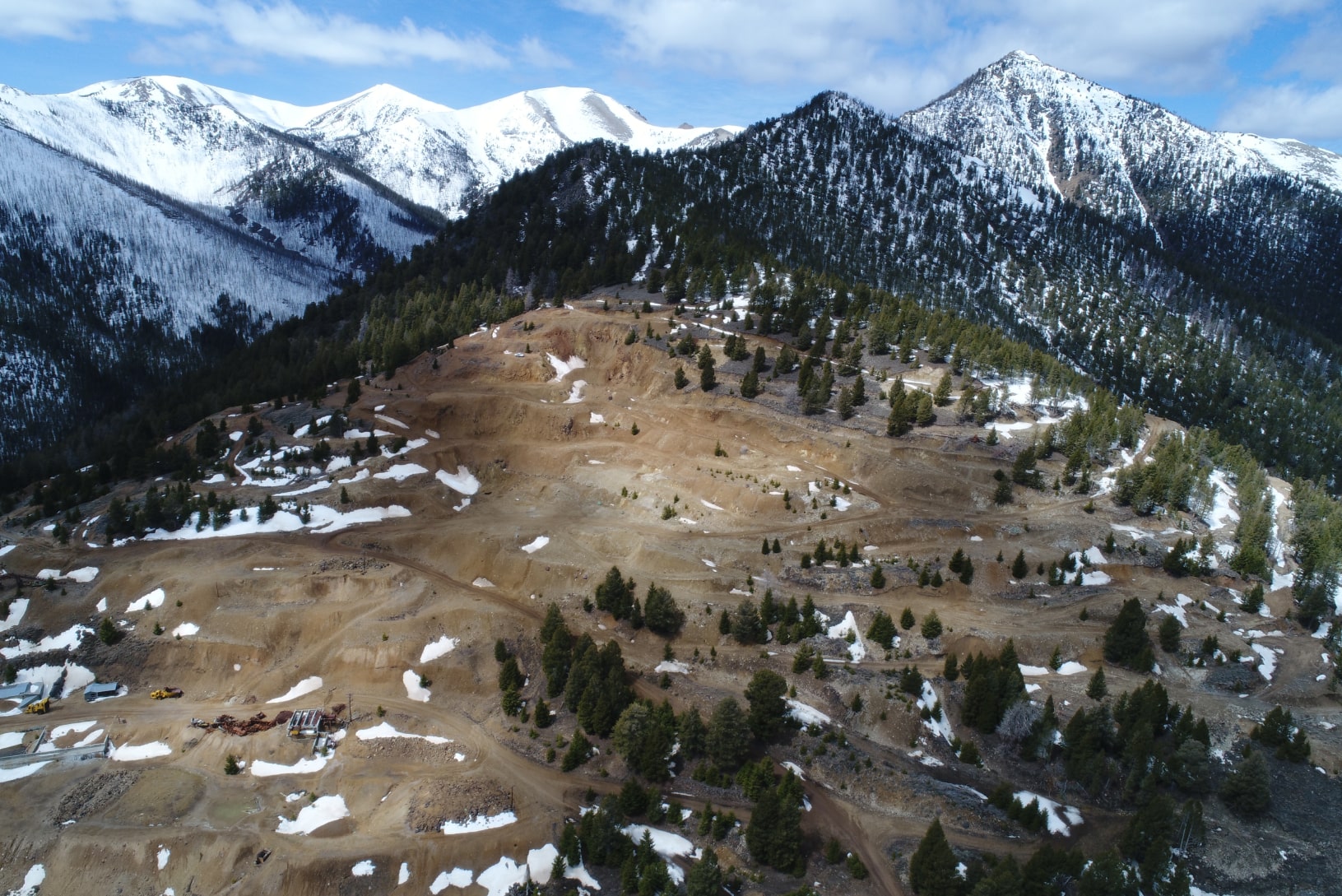
The Empire Copper Reserve, located near Mackay, Idaho, is our flagship exploration and development project. The Project is operated by Phoenix and owned by Konnex Resources, of which Phoenix has an 80% interest.
In 2017, Phoenix acquired its 80% stake in Konnex and immediately went to work advancing the Empire Open-Pit project. Since then, substantial progress has been made to transition the Project from exploration to production. This includes collecting environmental baseline data, achieving over 200% resource growth, and upgrading the Project’s mineral resources to a mineral reserve.

Pre-Feasibility Study
Our exploration and development team has published a Pre-Feasibility Study and is now in the process of completing the feasibility and detailed engineering design work necessary to submit a Plan of Operations. Once submitted, the Plan will undergo review by the U.S. Forest Service as required by the National Environmental Policy Act to receive a Record of Decision that will allow for operational commencement of mine.
The majority of the footprint proposed for the Empire Open-Pit Mine will be situated on privately owned land that was used historically for underground copper sulphide mining. The proposed process design will produce copper, gold and silver using flotation and agitated tank leach metal recovery technologies without the use of cyanide.
Mineral Reserve Statement for Empire Open-Pit Mine
Fully diluted tonnes @ a Net Smelter Return cut-off of $22.59/tonne
| Classification | Tonnes | Copper | Gold | Silver | Copper equivalent | |||||
|---|---|---|---|---|---|---|---|---|---|---|
| (x1000) | % | lb (x1000) | gpt | oz (x1000) | gpt | oz (x1000) | % | lbs (x1000) | tonnes | |
| Proven | 7,515 | 0.49 | 81,070 | 0.38 | 90.0 | 14.42 | 3,483 | 0.68 | 111,955 | 50,814 |
| Probable | 2,582 | 0.5 | 28,417 | 0.16 | 13.2 | 14.1 | 1,170 | 0.61 | 34,498 | 15,652 |
| Proven + Probable | 10,097 | 0.49 | 109,487 | 0.32 | 104 | 14.34 | 4,654 | 0.66 | 146,493 | 66,467 |
The mineral reserves reported herein for the Empire project have been estimated in a manner consistent with the NI 43-101 Committee of Mineral Reserves International Reporting Standards (“CRIRSCO”) of which both the Canadian Institute of Mining, Metallurgy and Petroleum (“CIM”) and Australasian Code for Reporting of Exploration Results, Mineral Resources and Ore Reserves (the “JORC Code”) are members.
Mineral Reserves Defined
Mineral reserves are defined as that portion of a mineral resource that can be realistically and economically mined. A mineral reserve must be proven by a detailed evaluation program and meet stringent requirements of geological certainty, accessibility, and economic viability, proving that a deposit is of sufficient quantity and quality to be defined as a viable, economically mineable reserve.
A mineral reserve typically includes allowances for losses (dilution) that may occur during the extraction process, as defined by feasibility engineering studies. To attain the distinction of being a “reserve,” this resource must also be fully evaluated and deemed commercially viable. Mineral reserves are typically defined as probable or proven reserves. Proven reserves are reserves where the spatial information of the reserve, including size, shape, and depth, as well as mineral content, is well-established.
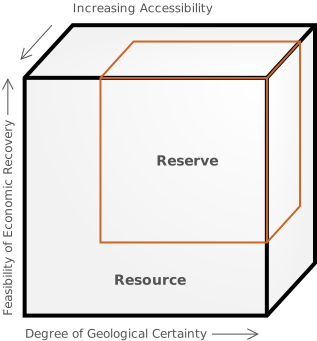
Probable reserves have some of the same qualities as a Proven reserve but may have sites for inspection, sampling, or measurement that are farther apart or otherwise less adequately spaced, which makes the data less reliable than for Proven reserves.
By comparison, mineral resources are defined as Measured and Indicated and are not necessarily economically mineable. A mineral reserve is extracted from the mineral resource and represents the economically mineable portion of a Measured and Indicated resource.
Development Roadmap
Exploration and Resource Growth
Process Design and Optimization
Detailed Engineering (Current Phase)
Finalize and Submit Plan of Operations to Regulators for Review
Await Completion of National Environmental Policy Act (NEPA) Process
Receive Record of Decision
Construction
Production (8 years)
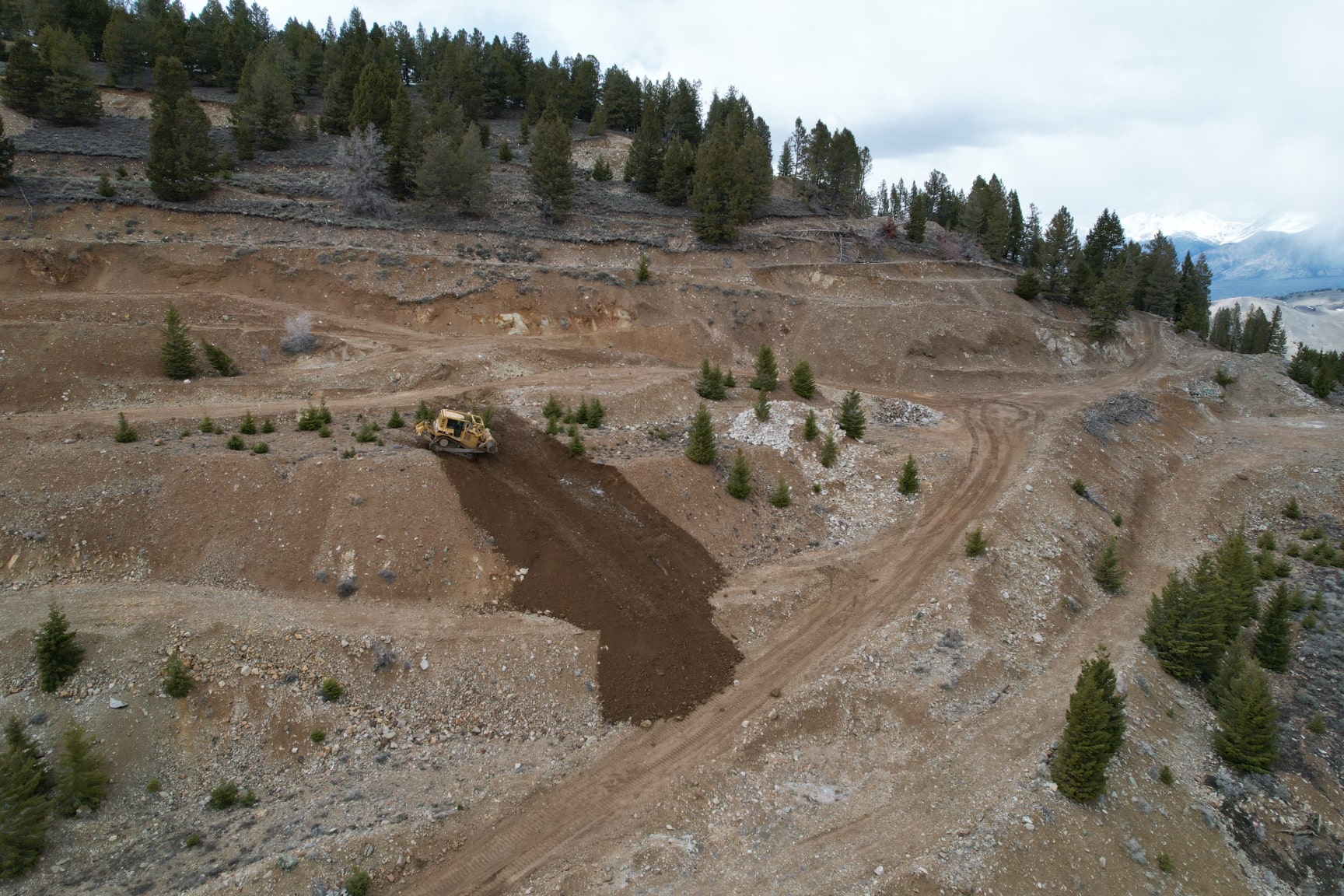
Closure and Reclamation
Geology
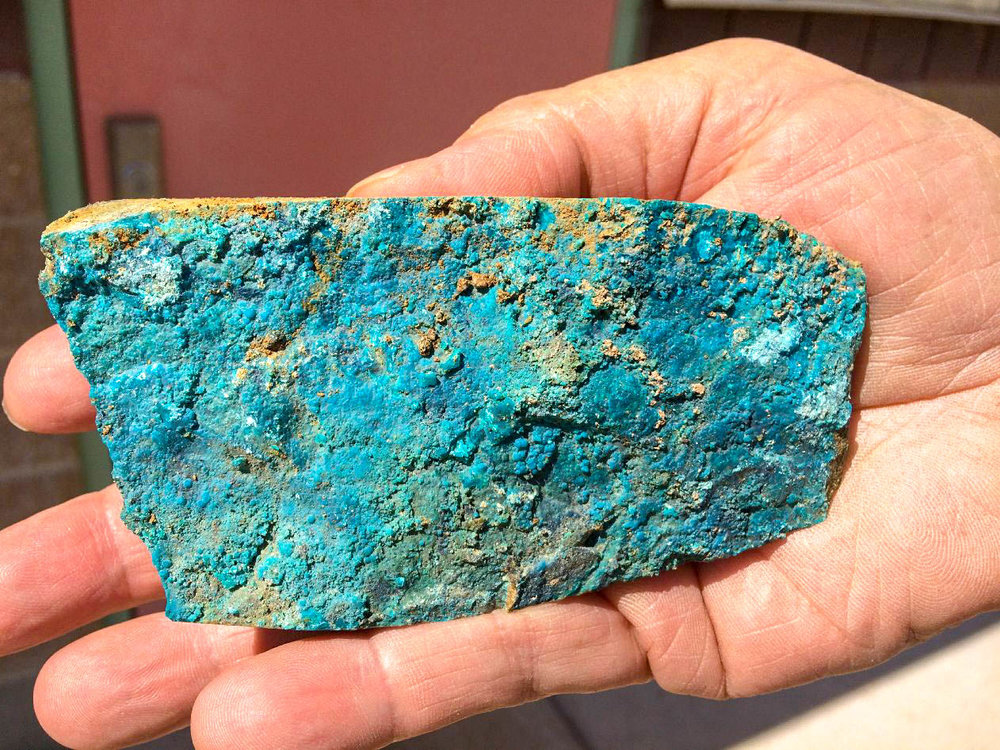
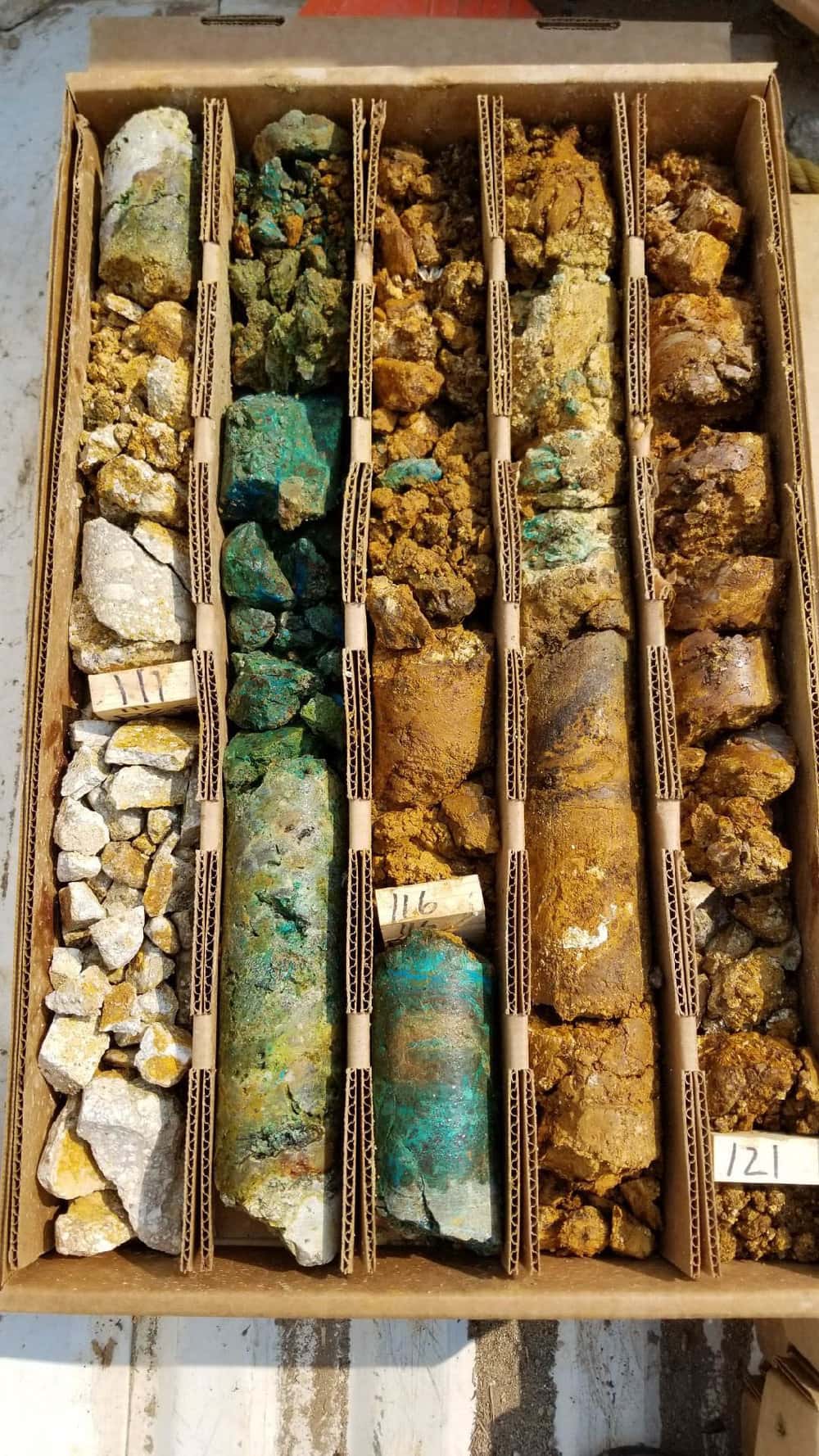
Mineralization at the Empire Copper Reserve is representative of a polymetallic skarn deposit. Polymetallic skarn systems can host mineralization containing a number of metals, including copper, gold, and silver. The term skarn is used to refer to the metasomatic replacement of carbonate rocks such as limestones by calc-silicate mineral assemblages during contact or regional metamorphism. Mineral deposits associated with skarn assemblages are referred to as skarn deposits and are typically the product of contact metamorphism and metasomatism associated with the intrusion of granite or porphyritic systems into carbonate sediments. The different metals found in skarn deposits are a product of differing compositions, oxidation state, and metallogenic affinity of the intrusion that provides the source fluids. The metals observed at the Empire Copper Reserve are indicative of an intermediate I-type granite source.
History of Empire
- High-grade underground mining of the Empire Copper Sulphide Vein System produces 6 to 8% copper
- Mine closes as a result of World War II
- 287 holes drilled into Empire Open-Pit resource
- Phoenix acquires 80% of Empire
- Phoenix drills additional holes, increasing drill hole count to roughly 485 holes
- Phoenix grows resource to include gold and silver
- Phoenix conducts metallurgical test work to optimize recovery of copper, gold and silver
- Phoenix grows resource by more than 200%
- Phoenix upgrades mineral resources into mineral reserves
- Phoenix purchases pre-owned milling equipment, analytical laboratory, rolling stock and tailings de-watering equipment, which has reduced the overall project capex
- Phoenix publishes pre-feasibility report for Empire Open-Pit
Future
We intend to further explore the Empire Copper Sulphide Vein System located deep below the surface of the open pit. We hope the exploration will enable us to revive the historical underground mining of the deposit. This would allow us to extend the life of mining in the area, creating more job security for the workforce and prolonging the economic benefits of mining. We believe that the same processing facility used for the Empire Open-Pit would be used to process the sulphide vein material, as floatation is a standard method for extracting copper sulphides. This would minimize the capex required for mining the sulphide vein system and reduce the need to grow our operational footprint. In addition, adding a relatively small quantity of higher-grade sulphide ore to the oxide ores being processed has the potential to significantly improve the economics of the Empire Open-Pit project.
Reports
Photo Gallery